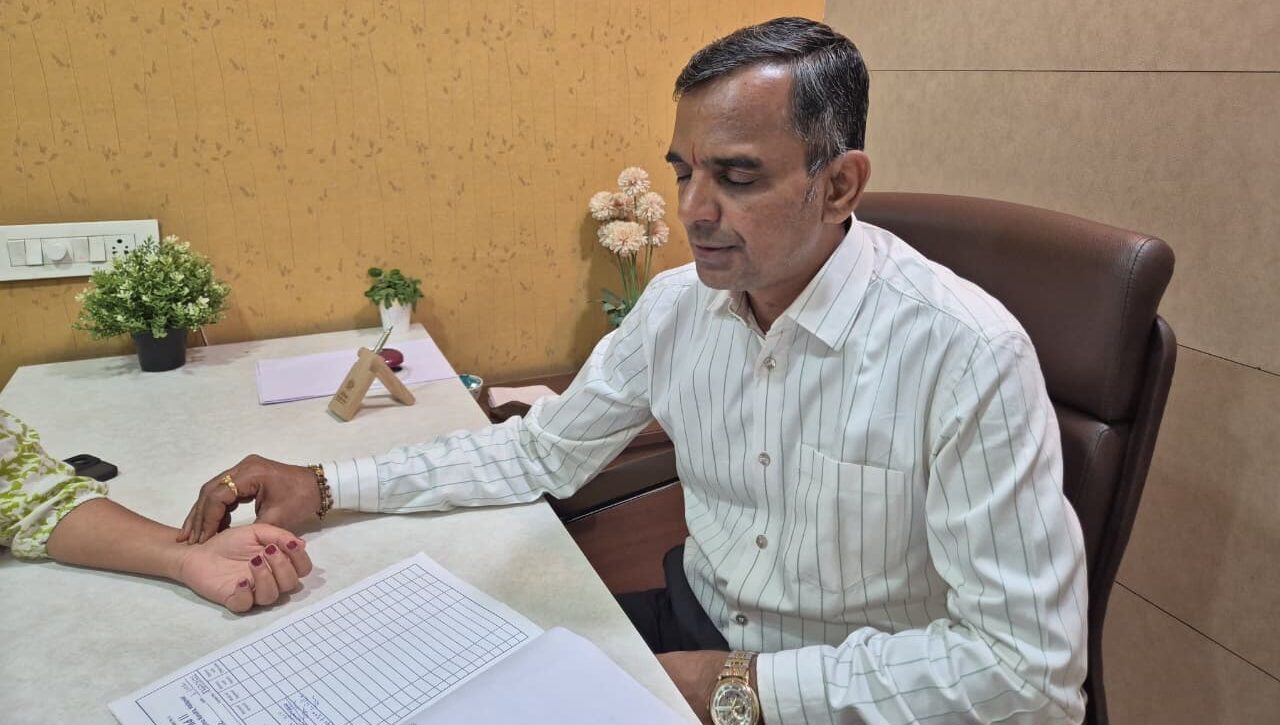
Nadi Parikshan
Nadiparikshan is specialised feature in Ayurveda. No two person are similar their nature or disease. So doing by a specific nadiparikshan of every person vaidya gets detailed knowledge of patients problem

Nadiparikshan is specialised feature in Ayurveda. No two person are similar their nature or disease. So doing by a specific nadiparikshan of every person vaidya gets detailed knowledge of patients problem
The main goal of Ayurveda is prevention as well as promotion of the body’s own capacity for maintenance and balance. Ayurvedic medicine aims to integrate and balance the body, mind, and spirit.This balance is believed to lead to happiness and health, and to help prevent illness. Ayurvedic medicine also treats specific physical and mental health problems.
Basically in Ayurveda there are three essential humours .Vayu, Pitta and Kapha. Blood is added as the fourth humour. Vayu:It controls the creation, growth, and disintegration of all living organisms. Pitta:It is responsible for the creation of heat and all forms of radiant energy in the body. It is also responsible for the pumping action of heart, skin’s temperature, and the vitality of blood. Kapha: Kapha supplies the placid and cooling principles to the body which can cause disease if they become imbalanced.
- How Nadi Pariksha Helps in Diagnosis & Personalised Treatment Planning.
- Understanding Individual Constitution (Prakruti) Nadi Pariksha helps the physician assess the dominant Dosha constitution (Vata, Pitta, Kapha) of an individual. This forms the foundation for personalised diet, lifestyle, and treatment planning, rather than a one-size-fits-all approach.
- Identifying Dosha Imbalance (Vikriti) Subtle variations in the pulse assist in understanding current Dosha imbalance, even before clinical symptoms become prominent. This allows early intervention and preventive care.
- Assessing Digestive Strength (Agni) Through pulse examination, the physician evaluates the status of Agni (digestive and metabolic strength) and presence of Ama. Treatment is then planned to first correct digestion before initiating Shodhana or Shamana therapies.
- Srotas Evaluation (Body Channels) Nadi Pariksha provides insight into the involvement of specific Srotas (functional channels such as Annavaha, Mutravaha, Shukravaha, etc.), helping in targeted therapy selection.
- Assessing Rogi Bala (Patient Strength) The pulse reflects the overall vitality and resilience of the patient, which guides
- Selection of mild vs strong therapies
- Dosage of medicines
- Decision for OPD vs IPD Panchakarma
- Planning Personalised Panchakarma
- Based on Nadi Pariksha findings, physicians decide:
- Which Panchakarma is indicated
- Timing and intensity of therapy
- Need for Purva Karma preparation
- Appropriate Paschat Karma care
- Monitoring Treatment Response Periodic pulse examination helps assess response to treatment and guides necessary modifications, ensuring therapy remains safe and individualised.
Nadiparikshan is specialised feature in Ayurveda. No two person are similar their nature or disease. So doing by a specific nadiparikshan of every person vaidya gets detailed knowledge of patients problem
The main goal of Ayurveda is prevention as well as promotion of the body’s own capacity for maintenance and balance. Ayurvedic medicine aims to integrate and balance the body, mind, and spirit.This balance is believed to lead to happiness and health, and to help prevent illness. Ayurvedic medicine also treats specific physical and mental health problems.
Basically in Ayurveda there are three essential humours Vayu, Pitta and Kapha. Blood is added as the fourth humour.
Vayu
It controls the creation, growth, and disintegration of all living organisms.
Pitta
It is responsible for the creation of heat and all forms of radiant energy in the body. It is also responsible for the pumping action of heart, skin’s temperature, and the vitality of blood.
Kapha
Kapha supplies the placid and cooling principles to the body which can cause disease if they become imbalanced.
- Planning Personalised Panchakarma
- Selection of mild vs strong therapies
- Dosage of medicines
- Decision for OPD vs IPD Panchakarma
- Planning Personalised Panchakarma
- How Nadi Pariksha Helps in Diagnosis & Personalised Treatment Planning.
- Understanding Individual Constitution (Prakruti)
Nadi Pariksha helps the physician assess the dominant Dosha constitution (Vata, Pitta, Kapha) of an individual. This forms the foundation for personalised diet, lifestyle, and treatment planning, rather than a one-size-fits-all approach.
- Identifying Dosha Imbalance (Vikriti)
Subtle variations in the pulse assist in understanding current Dosha imbalance, even before clinical symptoms become prominent. This allows early intervention and preventive care.
- Assessing Digestive Strength (Agni)
Through pulse examination, the physician evaluates the status of Agni (digestive and metabolic strength) and presence of Ama. Treatment is then planned to first correct digestion before initiating Shodhana or Shamana therapies.
- Srotas Evaluation (Body Channels)
Nadi Pariksha provides insight into the involvement of specific Srotas (functional channels such as Annavaha, Mutravaha, Shukravaha, etc.), helping in targeted therapy selection.
- Assessing Rogi Bala (Patient Strength)
The pulse reflects the overall vitality and resilience of the patient, which guides
- Based on Nadi Pariksha findings, physicians decide:
- Which Panchakarma is indicated
- Timing and intensity of therapy
- Need for Purva Karma preparation
- Appropriate Paschat Karma care
- Monitoring Treatment Response
Periodic pulse examination helps assess response to treatment and guides necessary modifications, ensuring therapy remains safe and individualised.
- How Nadi Pariksha Helps in Diagnosis & Personalised Treatment Planning
- Understanding Individual Constitution (Prakruti)
- Nadi Pariksha helps the physician assess the dominant Dosha constitution (Vata, Pitta, Kapha) of an individual.
- This forms the foundation for personalised diet, lifestyle, and treatment planning, rather than a one-size-fits-all approach.
- Identifying Dosha Imbalance (Vikriti)
- Subtle variations in the pulse assist in understanding current Dosha imbalance, even before clinical symptoms become prominent.
- This allows early intervention and preventive care.
- Assessing Digestive Strength (Agni)
- Through pulse examination, the physician evaluates the status of Agni (digestive and metabolic strength) and presence of Ama.
- Treatment is then planned to first correct digestion before initiating Shodhana or Shamana therapies.
- Srotas Evaluation (Body Channels)
Nadi Pariksha provides insight into the involvement of specific Srotas (functional channels such as Annavaha, Mutravaha, Shukravaha, etc.), helping in targeted therapy selection.
- Assessing Rogi Bala (Patient Strength)
The pulse reflects the overall vitality and resilience of the patient, which guides:
- Selection of mild vs strong therapies
- Dosage of medicines
- Decision for OPD vs IPD Panchakarma
- Planning Personalised Panchakarma
Based on Nadi Pariksha findings, physicians decide:
- Which Panchakarma is indicated
- Timing and intensity of therapy
- Need for Purva Karma preparation
- Appropriate Paschat Karma care
- Monitoring Treatment Response
Periodic pulse examination helps assess response to treatment and guides necessary modifications, ensuring therapy remains safe and individualised.
How Nadi Pariksha Helps In Diagnosis & Treatment Planning
Understanding Individual Constitution (Prakruti)
- Nadi Pariksha helps the physician assess the dominant Dosha constitution (Vata, Pitta, Kapha) of an individual.
- This forms the foundation for personalised diet, lifestyle, and treatment planning, rather than a one-size-fits-all approach.
Identifying Dosha Imbalance (Vikriti)
- Subtle variations in the pulse assist in understanding current Dosha imbalance, even before clinical symptoms become prominent.
- This allows early intervention and preventive care.
Assessing Digestive Strength (Agni)
- Through pulse examination, the physician evaluates the status of Agni (digestive and metabolic strength) and presence of Ama.
- Treatment is then planned to first correct digestion before initiating Shodhana or Shamana therapies.
Srotas Evaluation (Body Channels)
Nadi Pariksha provides insight into the involvement of specific Srotas (functional channels such as Annavaha, Mutravaha, Shukravaha, etc.), helping in targeted therapy selection.
Assessing Rogi Bala (Patient Strength)
- Selection of mild vs strong therapies
- Dosage of medicines
- Decision for OPD vs IPD Panchakarma
- Planning Personalised Panchakarma
Monitoring Treatment Response
Periodic pulse examination helps assess response to treatment and guides necessary modifications, ensuring therapy remains safe and individualised.
How Nadi Pariksha Helps In Diagnosis &
Treatment Planning
Understanding Individual Constitution (Prakruti)
- Nadi Pariksha helps the physician assess the dominant Dosha constitution (Vata, Pitta, Kapha) of an individual.
- This forms the foundation for personalised diet, lifestyle, and treatment planning, rather than a one-size-fits-all approach.
Identifying Dosha Imbalance (Vikriti)
- Subtle variations in the pulse assist in understanding current Dosha imbalance, even before clinical symptoms become prominent.
- This allows early intervention and preventive care.
Assessing Digestive Strength (Agni)
- Through pulse examination, the physician evaluates the status of Agni (digestive and metabolic strength) and presence of Ama.
- Treatment is then planned to first correct digestion before initiating Shodhana or Shamana therapies.
Srotas Evaluation (Body Channels)
- Nadi Pariksha provides insight into the involvement of specific Srotas (functional channels such as Annavaha, Mutravaha, Shukravaha, etc.), helping in targeted therapy selection.
Assessing Rogi Bala (Patient Strength)
- Selection of mild vs strong therapies
- Dosage of medicines
- Decision for OPD vs IPD Panchakarma
- Planning Personalised Panchakarma
Monitoring Treatment Response
- Periodic pulse examination helps assess response to treatment and guides necessary modifications, ensuring therapy remains safe and individualised.
- Nadi Pariksha helps the physician assess the dominant Dosha constitution (Vata, Pitta, Kapha) of an individual.
- This forms the foundation for personalised diet, lifestyle, and treatment planning, rather than a one-size-fits-all approach.
- Subtle variations in the pulse assist in understanding current Dosha imbalance, even before clinical symptoms become prominent.
- This allows early intervention and preventive care.
- Through pulse examination, the physician evaluates the status of Agni (digestive and metabolic strength) and presence of Ama.
- Treatment is then planned to first correct digestion before initiating Shodhana or Shamana therapies.
- Nadi Pariksha provides insight into the involvement of specific Srotas (functional channels such as Annavaha, Mutravaha, Shukravaha, etc.), helping in targeted therapy selection.
- Selection of mild vs strong therapies
- Dosage of medicines
- Decision for OPD vs IPD Panchakarma
- Planning Personalised Panchakarma
- Periodic pulse examination helps assess response to treatment and guides necessary modifications, ensuring therapy remains safe and individualised.